DESIGN · SUPPLY · INSTALLATION — NATIONWIDE
Security Mesh Cages
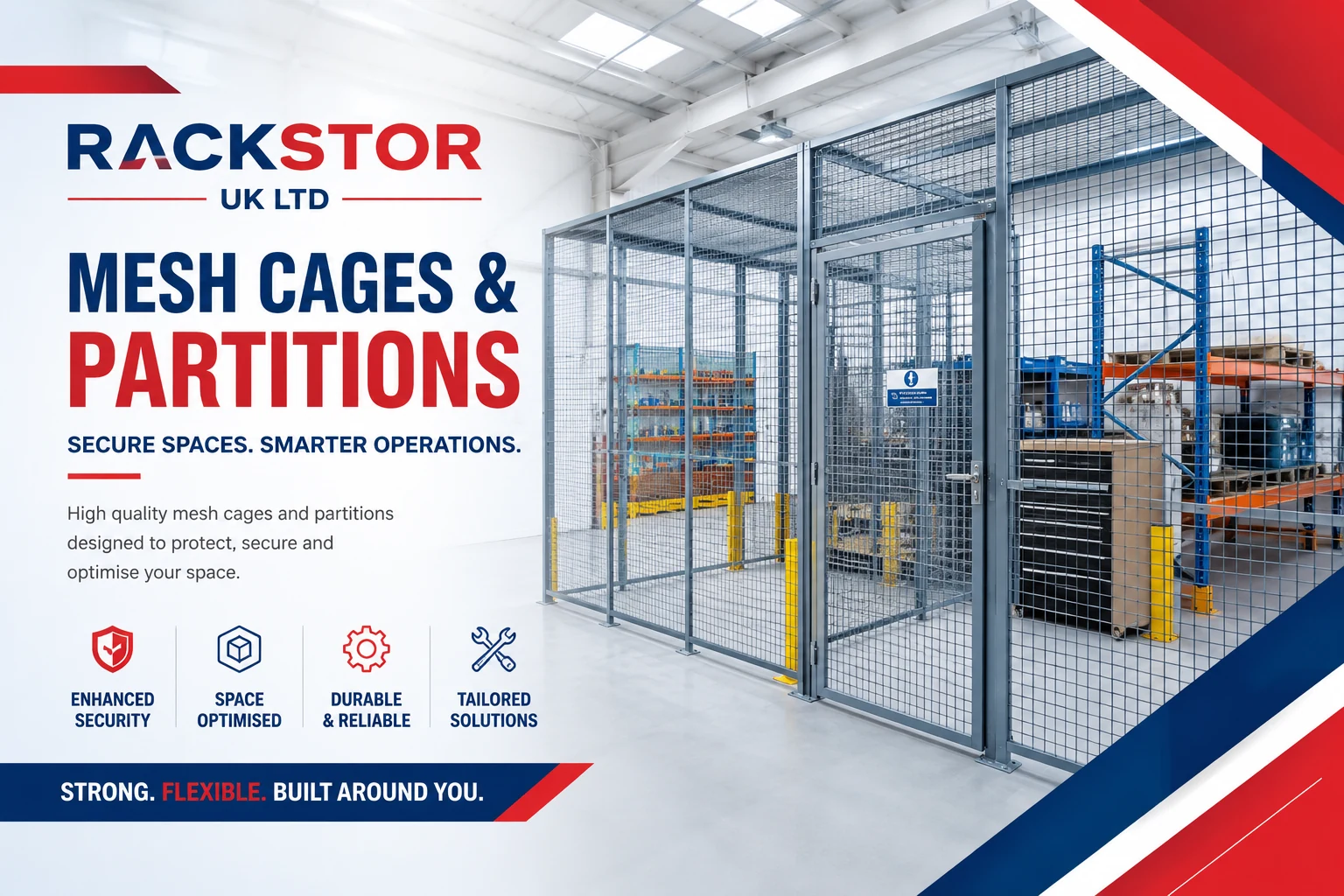
Purpose-built mesh cages for protecting high-value, controlled or hazardous stock. Available as standalone freestanding enclosures or as integrated lock-up sections within larger partitioned areas.
Features
- Fully welded, anti-tamper construction
- Industrial mortice or padlock-ready latching
- Hinged single, double or sliding doors
- Optional roof / ceiling mesh for total containment
- Bolt-down floor fixings for permanent installation
Applications
- Tool and equipment stores
- IT, AV and stock cages
- Pharma and controlled-substance storage
- Evidence and bonded goods
Specification
Where Cages Are Used
Security mesh cages are used wherever a fully enclosed steel volume is needed to control access to a defined area within a larger building. Typical deployments include tool and PPE stores, IT and AV equipment cages in warehouses and offices, bonded and duty-suspended goods compounds, pharmaceutical and controlled-drug storage in NHS pharmacies and community pharmacies, police and legal evidence stores, and data centre meet-me and cable-ladder protection. The common thread is that the cage encloses a working volume — a pallet, a shelving bay or an entire room — rather than a single item, and the open mesh gives visible deterrence while preserving airflow, lighting and sprinkler coverage inside the enclosure.
Security Grades
Cages are specified in three broad grades. Standard duty uses 3 mm welded wire on a 50 × 50 mm aperture in a rolled-angle frame and is appropriate for tool stores, IT cages and general stock protection. Enhanced duty steps up to 4 mm wire with closer post centres and reinforced door frames, suitable for higher-value stock and controlled substances. Heavy duty uses 5 mm wire on RHS (rectangular hollow section) corner posts with hinge bolts, tamper-resistant floor fixings and a heavy-duty lock, suitable for high-security evidence and pharmaceutical stores. The grade should be selected against your insurer's stipulations rather than picked from a catalogue.
Door and Lock Specification
The door is engineered as a distinct assembly because it is almost always the weakest point of any enclosure. Hinges are welded and fitted with a security pin so the door cannot be lifted off if the pins were driven out. The frame is reinforced around the lock. Locking options include a heavy hasp and staple for a padlock (simple, easy to key alike across multiple cages), a boxed mortice deadlock, a euro-cylinder lock keyed into your existing site master-key suite, or an electronic access control reader wired back to the site's access control system so entries and exits are logged. Double-leaf doors carry drop bolts on the passive leaf.
Roofs and Overhead Coverage
In almost every warehouse or open-ceiling environment, a cage needs its own roof — without one, the enclosure can be climbed over from adjacent racking or a mezzanine edge. Roof panels are supplied in the same welded mesh as the walls, so airflow and overhead sprinkler coverage are preserved. Standard cage heights are 2.1 m, 2.4 m and 3.0 m; taller cages are built to order. Where a cage is built up to the underside of a low ceiling, the top of the cage can be tied into the soffit to close any gap that would otherwise allow reach-over access.
Frequently Asked Questions
Do I need a roof on the cage?
In almost every open-warehouse environment, yes. Without a roof panel the cage can be climbed over or reached across from adjacent racking. The exception is where the cage is fitted tight to the underside of a solid ceiling with no reachable adjacent structure.
Can several cages be keyed alike?
Yes. Padlocks or cylinder locks can be supplied keyed alike so one key opens all cages, or on a master-key suite so a supervisor key opens everything while individual keys only open their own cage.
Can the cage be integrated with our access control system?
Yes. Cage doors can be prepared for a proximity or fob reader, magnetic lock or electric strike wired back to your existing access control panel.
What wire thickness is appropriate?
3 mm wire is adequate for IT and tool stores; 4 mm is normally specified for higher-value or controlled stock; 5 mm on RHS posts is used for evidence, bonded and pharmaceutical stores. Always confirm any specific requirement with your insurer.
Are cages designed to insurer requirements?
Yes. Where your broker has stipulated a specific wire gauge, lock standard or CCTV coverage arrangement, share those requirements at survey stage and the cage is specified to match.
The real cost of not having a cage
Loss scenarios, insurance conditions and how to build the internal business case for a secure compound before an incident rather than after one.
Read the guideRequest a quote
Free site survey. Fast turnaround. Nationwide installation.